Identifying priorities and actions to deliver a sustainable, low-carbon and resilient energy system
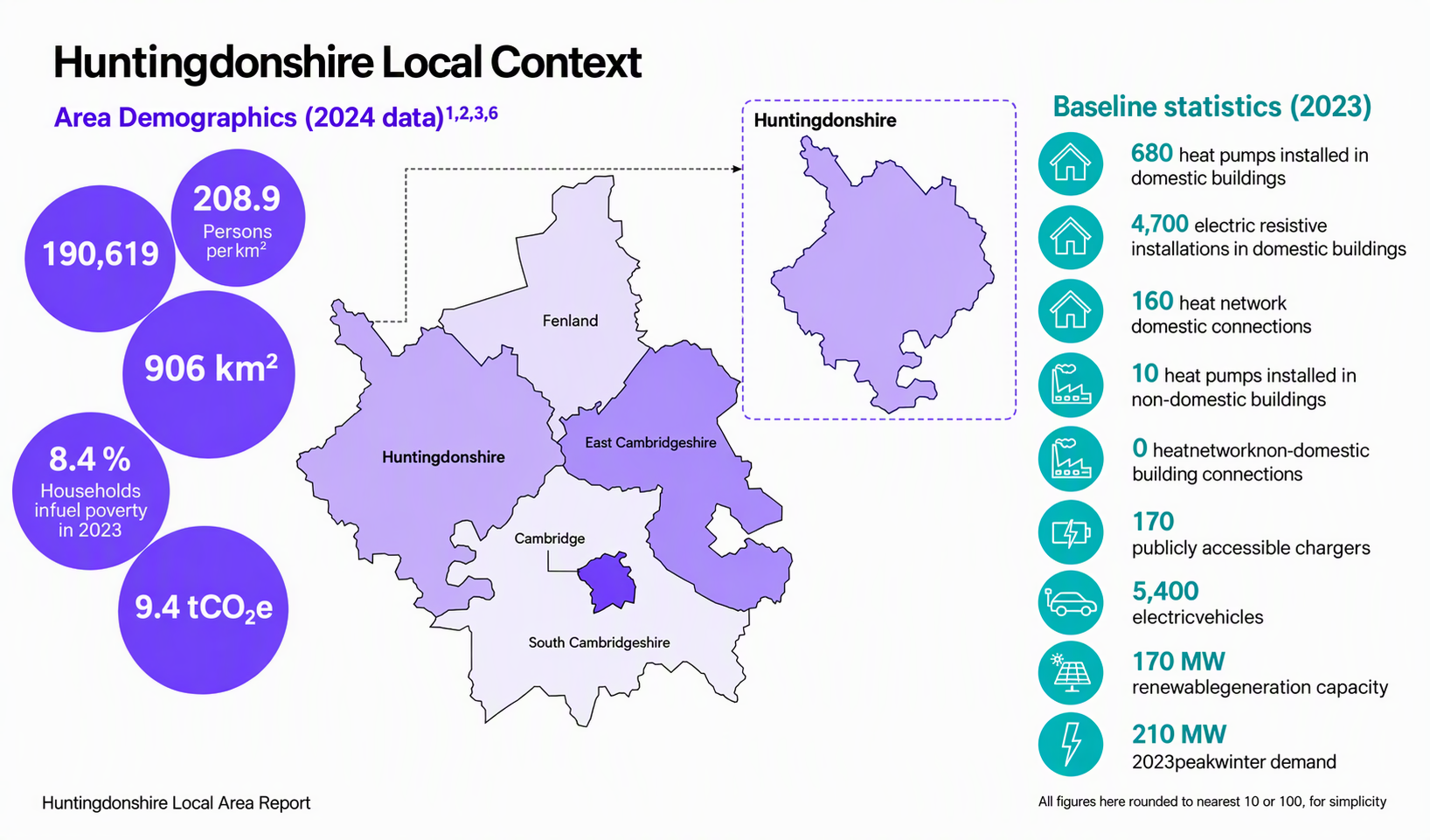
The Huntingdonshire Local Area Energy Report provides a ‘district-level’ area view and draws on the detail within the Cambridgeshire Local Area Energy Plan (LAEP). The report supports both current and future growth by setting out the scale of change and investment needed.
The Cambridgeshire LAEP is a county-wide roadmap showing options for how we can transition to a cleaner, more affordable and resilient energy system by 2045.
Led by Cambridge County Council and delivered in partnership with District Councils and Cambridgeshire & Peterborough Combined Authority (CPCA), the plans bring together detailed local evidence to identify how Cambridgeshire could reduce carbon emissions while supporting thriving communities, economic growth and energy security.
It sets out locally tailored interventions across buildings, transport, industry, and energy generation, integrating projected growth in housing, employment, and infrastructure to align decarbonisation with development.
What does the LAEP mean for where you live?
As Huntingdonshire grows, the focus is on ensuring energy infrastructure keeps pace with new homes, jobs and businesses. The LAEP identifies opportunities to improve older housing stock in areas such as Ramsey and Elton, helping residents reduce bills and improve comfort.
The plan also highlights potential opportunities for heat networks in Huntingdon, St Neots, Alconbury and Wyton, alongside investment in renewable energy generation and electric vehicle charging infrastructure.
Local Area Energy Plan
A more detailed Technical Report has also been created, which includes the methods used in producing the LAEP. To request a copy, please email climate@cambridgeshire.gov.uk.
Support
Through local and national funding, advice and support is available to residents, businesses and communities to help reduce energy use, lower bills and cut carbon emissions.
This includes:
-
Grant aid programmes and information on other available opportunities
-
Advice can be found on the government website - find ways to save energy in your home
-
Ideas to reduce costs and save energy Home Energy - Cambridge Carbon Footprint
-
Searchable database of Open Eco Homes - Case Studies - Cambridge Carbon Footprint listing local suppliers and accounts of household experiences
-
Ways to improve your home’s energy efficiency - Citizens Advice.
The LAEP further supports Cambridgeshire communities by attracting investment and funding opportunities to deliver long-term benefits.
Frequently asked questions
What is a Local Area Plan?
A Local Area Energy Plan (LAEP) is a long-term strategy that examines how energy is supplied and used across an area and identifies the most practical and cost-effective pathway to achieving net zero emissions.
How was the Cambridgeshire Local Area Plan created?
The Cambridgeshire Local Area Energy Plan was developed through a partnership between Cambridgeshire County Council, Cambridge City Council, East Cambridgeshire District Council, Huntingdonshire District Council, South Cambridgeshire District Council and the Cambridgeshire & Peterborough Combined Authority (CPCA). The project was jointly funded by the partners, with the CPCA providing the main contribution.
The partnership worked closely with UK Power Networks (UKPN), which manages the local electricity network, to ensure the plan reflects future energy needs and infrastructure requirements. The LAEP was also shaped by the people and organisations who know Cambridgeshire best through workshops, surveys and engagement activities.
What is meant by energy infrastructure?
Energy infrastructure refers to the network of cables, pipes and sub-stations used to move energy from one place to another. Electricity infrastructure is the low voltage level power to our homes and businesses owned and managed by the Distribution Network Operator (DNO).
In Cambridgeshire this is UK Power Networks (UKPN) who are regulated by Ofgem. The LAEP aims to influence UKPN investment plans to expand and improve energy infrastructure.
What does LAEP mean for residents?
The LAEP helps identify how homes across Cambridgeshire can become warmer, healthier and cheaper to run. The plan also helps ensure the energy network is upgraded in areas where households can adopt low-carbon technologies such as heat pumps, solar panels and electric vehicle chargers.
What does LAEP mean for businesses?
The LAEP provides businesses with evidence-based insights into future energy demand and opportunities, helping to inform strategic business planning. Organisations can benefit from lower operating costs through improved energy efficiency, increased use of renewable energy technologies such as solar power and battery storage, low-carbon heating solutions, and expanded access to electric vehicle charging infrastructure.
How will LAEP support Local Planning processes?
The LAEP will provide an evidence source to help inform Local Plans alongside wider planning evidence with decisions regarding site proposals.